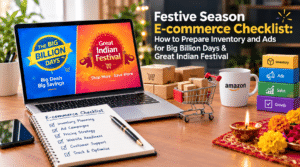

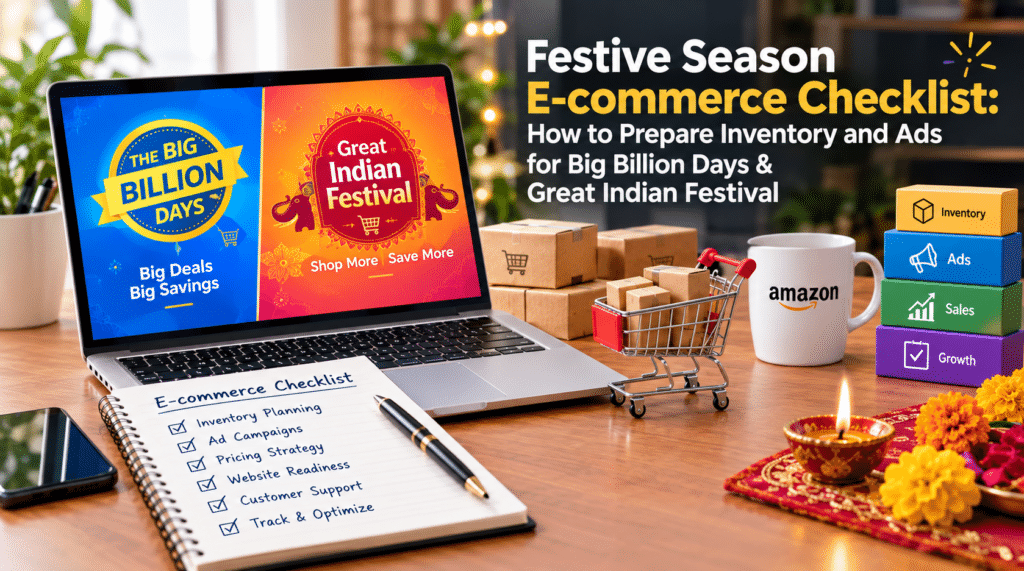
India’s festive season is the ultimate Super Bowl for e-commerce sellers and D2C brands. During flagship sales like Flipkart’s Big Billion Days (BBD) and Amazon’s Great Indian Festival (GIF), consumer spending spikes exponentially, driving month-scale sales volumes into a matter of days.
However, capturing this surge requires precise planning. A minor stockout or a mismanaged ad budget can quickly compromise profit margins. This comprehensive checklist outlines how to prepare inventory, optimize ad campaigns, and capture high-intent buyers during India’s largest shopping events.
1. Festive Season Prep Timeline (60 Days Out)
Successful festive sales require early preparation. Waiting until the sale announcement risks logistical bottlenecks and stockout penalties.
60 Days Out: Stock Forecasting & Vendor POs
   │
   ▼
45 Days Out: Fulfillment Hub Delivery & APOB Updates
   │
   ▼
30 Days Out: Listing Optimization & Creative Asset Freeze
   │
   ▼
15 Days Out: Ad Campaign Structure & Keyword Bidding Setup
   │
   ▼
Sales Event: Real-Time Inventory & Bid Monitoring
- 60–45 Days Out: Finalize sales forecasts, issue purchase orders (POs) to manufacturers, and register Additional Place of Business (APOB) locations if expanding to regional fulfillment hubs.
- 30 Days Out: Deliver stock to Amazon Flex/FBA and Flipkart Fulfillment centers. Freeze catalogue image updates and optimize product listings with festive-focused search terms.
- 15 Days Out: Build dedicated ad campaign structures, set up negative keyword lists, and allocate budget reserves for peak sale days.
If you are also leveraging quick commerce platforms for instant local delivery during peak shopping days, check our complete operational guide on Zepto Seller Onboarding Guide 2026: Requirements, Margins, and Dark Store Allocation.
2. Inventory & Supply Chain Optimization
Stockouts during festive events result in missed revenue and lower organic search rankings. Conversely, overstocking ties up working capital in unsold inventory.
A. Calculate Your Festive Stock Requirements
Base your inventory allocation on historical sales velocity, adding a festive multiplier:
$$\text{Festive Inventory Requirement} = \text{Average Daily Units Sold} \times 30 \times \text{Festive Growth Multiplier (3x – 5x)}$$
B. Regional Stock Placement
Distribute inventory across major regional hubs (North, South, West, East) to shorten delivery times and qualify for prime delivery badges.
| Fulfillment Channel | Key Action Item | Deadline |
| Amazon FBA | Inbound shipment creation and slot booking | 30 Days Prior |
| Flipkart Fulfilled (FBF) | ASN generation and warehouse appointment | 30 Days Prior |
| Quick Commerce (Blinkit/Zepto) | Mother hub stocking for instant local delivery | 15 Days Prior |
For a broader breakdown of quick commerce logistics vs traditional channels, see our comparative strategy guide on Swiggy Instamart vs Blinkit for Brands: Which Quick Commerce Platform Offers Better ROI?.
3. High-Converting Product Detail Page Checklist
High ad spend will not convert without optimized product detail pages. Focus on these core elements before driving traffic:
- Festive Visual Banners: Update gallery images to highlight festive gifting packaging, value bundles, and limited-time offer badges.
- A+ Content & Brand Store: Redesign A+ modules to feature cross-selling comparison tables, helping buyers discover complementary SKUs.
- Search Intent Keywords: Integrate high-volume festive keywords (“festive gift set,” “diwali offer,” “combos under 999”) into titles, bullet points, and backend search terms.
- Review & Rating Health: Ensure core SKUs maintain at least 15+ reviews and a rating above 4.1 stars. Address unresolved customer queries beforehand to protect conversion rates.
4. Advertising Strategy for Maximum ROAS
Ad costs per click (CPC) rise sharply during BBD and GIF due to intense advertiser competition. Managing ad spend requires structured campaign controls.
[Targeting Strategy] ──► [Pre-Sale: Brand Awareness & Cart Adding]
                              │
                              ▼
                        [Peak Sale: High-Intent Keyword Bidding]
                              │
                              ▼
                        [Post-Sale: Retargeting Abandoned Carts]
A. Pre-Sale Phase (Warm-up Phase)
- Focus on sponsored display and video ads to drive brand consideration and cart adds.
- Target competitor brand terms and broader in-market audiences searching for gifting options.
B. Peak Sale Phase (Conversion Push)
- Shift budgets toward high-intent Exact Match sponsored product keywords.
- Apply positive placement bid adjustments (+50% to +100%) for Top of Search (First Page) to capture active buyers.
- Regularly check budget caps—running out of ad budget at mid-day drops listings from top placements during peak buying hours.
If you are experiencing declining ad efficiency or high ACoS on Amazon, review our framework on How to Fix Low ROAS on Amazon Sponsored Products: Step-by-Step Optimization Guide.
5. Post-Festive Retention Strategy
The festive period brings a rush of new customers. Converting these first-time buyers into repeat customers protects long-term return on investment:
- Include Package Inserts: Insert thank-you cards featuring QR codes pointing to brand registration or future discount incentives on your D2C site.
- Execute Retargeting Campaigns: Run Sponsored Display retargeting campaigns targeting customers who viewed your products during the sale but did not buy.
- Monitor Account Health Metrics: Closely track Order Defect Rates (ODR) and late shipment rates post-sale to prevent platform penalties or account suspensions.
Frequently Asked Questions (FAQs)
Q1: How far in advance should I ship stock to Amazon FBA or Flipkart warehouses for festive sales?
Inbound stock should arrive at marketplace fulfillment centers at least 25 to 30 days before the sale event begins. Warehouses experience heavy receiving backlogs closer to the event, leading to processing delays.
Q2: Should I raise product prices before offering festive discounts?
No. Platforms like Amazon and Flipkart monitor price histories. Inflating prices right before a sale violates marketplace policies and can lead to buy box loss or deal cancellation.
Q3: How should I manage ad budgets during Big Billion Days and Great Indian Festival?
Increase your overall daily ad budget by 3x to 5x during peak sale days. Monitor campaign budgets every 2–3 hours to prevent profitable campaigns from exhausting funds mid-day.
Q4: How can I prevent out-of-stock penalties during high-velocity festive days?
Set up automated inventory management alerts that notify your team when stock levels fall below 20%. Maintain buffer stock at an off-site regional warehouse so you can quickly replenish Amazon FBA or Flipkart hubs within 24–48 hours.
Q5: What should I do if my Sponsored Product ads stop delivering mid-sale?
Check whether your daily budget cap has been reached or if your listing lost the Buy Box. During high-traffic hours, budgets deplete faster, so raising daily budget caps and lowering bids on low-converting keywords keeps your ads active.
Q6: Is it necessary to create special festive bundling or combo offers?
Yes. Festive shoppers actively look for high-value bundles, gift packs, and discounted multi-packs. Bundling higher-margin SKUs with best-sellers increases Average Order Value (AOV) and absorbs elevated CPC ad costs during peak sale days.
Q7: How do I handle sudden customer returns after the festive season ends?
Prepare your operations team for a post-festive return window (typically 7–10 days after delivery). Inspect returned goods promptly for unsellable items, file SAFE-T claims on Amazon or SPF claims on Flipkart for damaged or wrong returns, and update inventory counts.